Thyroid Optimization in Bradenton, Lakewood Ranch & Sarasota, FL
Beyond TSH. A complete thyroid and metabolic panel that reveals what standard labs miss.
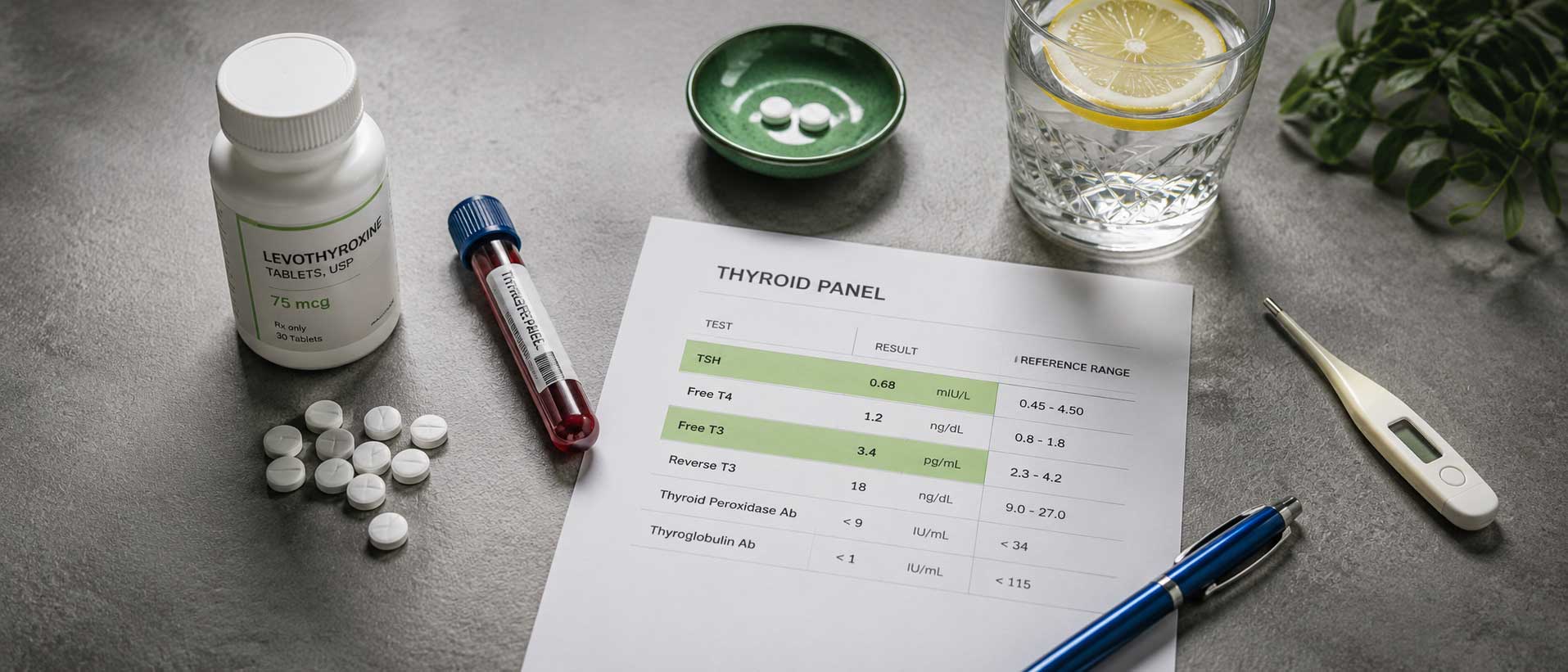
Most thyroid evaluations begin and end with a single lab: TSH. If that number falls within the reference range, the conclusion is that your thyroid is fine. But TSH alone does not tell you how much active thyroid hormone your cells are actually receiving, whether your body is converting T4 to T3 efficiently, or whether your immune system is attacking your thyroid tissue. Those are the questions that matter when a patient reports fatigue that will not lift, weight that will not budge, brain fog that has settled in like a permanent resident, and a body temperature that runs cold no matter the season. At iRevive, Ryan Hentges, NP runs a comprehensive thyroid panel on every patient, not just TSH. Free T3, free T4, reverse T3, and thyroid antibodies are all part of the baseline workup. Results are interpreted in the context of your symptoms, metabolic markers, and hormonal picture, because thyroid dysfunction rarely exists in isolation. It compounds with cortisol imbalance, sex hormone decline, and insulin resistance. Treating the thyroid without addressing the full metabolic ecosystem leaves gaps that keep patients stuck.
Hypothyroid | Hashimoto's | T3/T4 | Metabolic HealthAt a Glance
Service
Thyroid Optimization & Metabolic Support
Focus
Complete thyroid function, metabolic efficiency, symptom resolution
Labs Included
TSH, free T3, free T4, reverse T3, thyroid antibodies (TPO, TgAb)
Conditions
Hypothyroidism, Hashimoto's, subclinical thyroid dysfunction, metabolic slowdown
Available In
Bradenton, Lakewood Ranch, Sarasota, Venice
Model
Concierge telehealth + $99/mo membership
Why Does Standard Thyroid Testing Miss So Much?
TSH is a pituitary hormone. It tells you what your brain is asking the thyroid to do. It does not tell you what the thyroid is actually producing, how efficiently your body converts the storage form of thyroid hormone (T4) into the active form (T3), or whether your immune system is slowly destroying the gland itself. A TSH of 3.5 might be labeled "normal" on a lab report, but for many people that number reflects a thyroid that is already underperforming. Symptoms are present, but the lab says everything is fine.
Reverse T3 adds another layer. When the body is under chronic stress, dealing with inflammation, or running on a caloric deficit, it can convert T4 into reverse T3 instead of active T3. Reverse T3 blocks T3 receptors. The result is a patient with technically adequate TSH and T4 levels who still feels hypothyroid because the active hormone is not reaching the cells. Standard labs do not catch this pattern.
Thyroid antibodies (TPO and thyroglobulin antibodies) identify autoimmune thyroid disease, specifically Hashimoto's thyroiditis, which is the most common cause of hypothyroidism in the United States. Many patients with Hashimoto's have been told their labs are "normal" for years before TSH finally climbs high enough to cross the diagnostic threshold. By then, significant gland damage has occurred. Ryan Hentges, NP tests for antibodies from the start because catching autoimmune thyroid disease early changes the clinical approach and the prognosis.

What Does Thyroid Dysfunction Actually Feel Like?
Thyroid symptoms overlap with hormonal decline, depression, chronic fatigue syndrome, and stress. That overlap is exactly why so many thyroid conditions go undiagnosed or misdiagnosed for years. The patterns below are what Ryan Hentges, NP hears most often from patients whose comprehensive panel reveals thyroid dysfunction that a TSH-only test would have missed.
Hypothyroid & Hashimoto's Patterns
- Persistent fatigue that does not improve with rest or sleep
- Unexplained weight gain or inability to lose weight despite effort
- Feeling cold when others are comfortable, cold hands and feet
- Brain fog, poor concentration, difficulty with word recall
- Dry skin, brittle nails, thinning hair or hair loss
- Constipation, bloating, or sluggish digestion
- Depression, low motivation, or flattened emotional range
- Elevated cholesterol without dietary explanation
Subclinical & Metabolic Patterns
- Labs that read "normal" but symptoms persist
- Afternoon energy crashes, especially between 2 and 4 PM
- Morning fatigue that takes hours to clear
- Joint stiffness or muscle aches without clear orthopedic cause
- Menstrual irregularity or worsening PMS symptoms
- Anxiety, heart palpitations, or internal restlessness
- Rising fasting glucose or insulin without dietary changes
- Slow recovery from illness, exercise, or physical stress
How Does iRevive Evaluate and Optimize Thyroid Function?
A TSH-only approach treats the thyroid like a single dial. In reality, thyroid function involves production, conversion, receptor binding, immune status, and metabolic context. iRevive evaluates all of those layers before writing a prescription, and monitors all of them after treatment begins.
Full Thyroid Panel
TSH, free T3, free T4, reverse T3, TPO antibodies, and thyroglobulin antibodies. This panel captures production, conversion efficiency, receptor competition, and autoimmune status in a single draw.
Metabolic Context
Fasting insulin, glucose, HbA1c, cortisol, DHEA-S, lipid panel, and inflammatory markers drawn alongside thyroid labs. Thyroid dysfunction compounds metabolic dysfunction, and treating one without measuring the other leaves blind spots.
Targeted Protocol
Treatment decisions based on the full panel, not TSH alone. Options may include T4 monotherapy, combined T4/T3 therapy, T3-only protocols, or addressing conversion issues through nutrient and lifestyle interventions when medication is not yet indicated.
Lab-Driven Follow-Up
Thyroid labs rechecked at 6 to 8 weeks after starting or adjusting treatment. Free T3, free T4, reverse T3, and TSH all tracked over time. Dose adjustments informed by lab trends and symptom response together, not numbers in isolation.
What Your Thyroid Optimization Protocol May Include
Levothyroxine (T4) Therapy
T4 is the storage form of thyroid hormone and the most commonly prescribed replacement. For patients whose conversion from T4 to T3 is efficient, T4 monotherapy may be sufficient. Dosing calibrated to lab response, not population averages.
Liothyronine (T3) Therapy
For patients with poor T4-to-T3 conversion, elevated reverse T3, or persistent symptoms on T4 alone, adding direct T3 can resolve symptoms that T4 monotherapy cannot reach. Requires careful dosing and monitoring.
Combined T4/T3 Protocols
Some patients respond best to a combination of T4 and T3, either through separate prescriptions or desiccated thyroid formulations. The ratio is determined by lab data showing where the conversion bottleneck exists.
Reverse T3 Management
When reverse T3 is elevated, active T3 is being blocked from reaching receptors. This pattern often stems from chronic stress, inflammation, caloric restriction, or illness. Addressing the root cause is as important as adjusting medication.
Hashimoto's Monitoring
Elevated TPO or thyroglobulin antibodies confirm autoimmune thyroid disease. Once identified, antibody levels are tracked over time. The clinical approach shifts to managing autoimmune drivers, not just supplementing hormone output.
Nutrient Optimization
Selenium, zinc, iodine, iron, and vitamin D all play direct roles in thyroid hormone production and conversion. Deficiencies in any of these can impair thyroid function even when medication dosing is correct. Levels assessed and addressed as part of the protocol.
Metabolic Integration
Insulin resistance, cortisol dysregulation, and sex hormone imbalance all affect thyroid function. When labs reveal metabolic dysfunction alongside thyroid issues, both are addressed in parallel to avoid treating symptoms in one system while ignoring the driver in another.
Ongoing Clinical Oversight
Regular telehealth consultations with Ryan Hentges, NP. Lab rechecks at defined intervals. Direct access by call or text between scheduled appointments. Your protocol evolves with your labs, not on a fixed calendar disconnected from your response.
Potential Benefits of Thyroid Optimization
When thyroid function is genuinely optimized, not just brought to a reference-range minimum, patients often report improvements that extend well beyond the symptoms they originally presented with. Thyroid hormone affects nearly every tissue and metabolic process in the body, so restoring optimal levels can have wide-reaching effects.
Two Tracks for Thyroid & Metabolic Care

Thyroid Restoration Track
For patients with confirmed or suspected hypothyroidism, Hashimoto's thyroiditis, or subclinical thyroid dysfunction that standard testing has missed. This track begins with the full thyroid panel and builds a treatment protocol around your specific lab pattern. Whether the issue is underproduction, poor conversion, autoimmune destruction, or a combination of all three, the protocol is designed to address what is actually driving the dysfunction. Medication selection, dosing, and supporting interventions are all guided by lab data and adjusted at each follow-up.
Request Full Thyroid PanelMetabolic Optimization Track

For patients whose thyroid dysfunction exists alongside metabolic disruption: insulin resistance, cortisol imbalance, weight loss resistance, or lipid abnormalities that traditional medicine has not connected to a thyroid or hormonal root cause. This track evaluates thyroid function, fasting insulin, glucose metabolism, cortisol patterns, and sex hormones as an integrated system. Treatment targets the metabolic bottleneck, not individual lab values, because fixing one marker while ignoring the system it operates within produces temporary results at best.
Explore Weight ManagementThyroid Optimization Serving Bradenton, Lakewood Ranch & Sarasota
Finding a provider who runs more than TSH is harder than it should be. Most primary care offices and even many endocrinology practices default to TSH-only testing because that is what insurance-driven protocols require. By the time patients reach iRevive, many have been told for years that their labs are normal while their symptoms have been getting worse. That pattern ends with a provider who tests everything and takes the time to explain what the results mean. Ryan Hentges, NP runs the entire thyroid and metabolic evaluation through telehealth. Lab orders go to a draw station near you in Bradenton, Lakewood Ranch, Sarasota, or Venice. Results are reviewed together on a video call where every marker is discussed in context. Prescriptions ship to your door. And between appointments, you have direct access to your provider by call or text. The monthly membership starts at $99, which covers consultations, clinical oversight, and the kind of ongoing access that makes the difference between a prescription and an actual treatment relationship.
- Bradenton, FL
- Lakewood Ranch, FL
- Sarasota, FL
- Venice, FL
- Telehealth across Florida

Thyroid Optimization FAQs
Why do I still feel tired if my TSH is normal?
TSH reflects what your pituitary is signaling. It does not confirm that your cells are receiving adequate active thyroid hormone. Free T3 is the metabolically active form, and it can be low or suboptimal even when TSH looks acceptable. Reverse T3 can also be elevated, which blocks T3 from binding to receptors. Both patterns produce hypothyroid symptoms with a "normal" TSH result. The only way to identify these patterns is to run the full panel, which is why iRevive includes free T3, free T4, reverse T3, and antibodies on every thyroid workup.
What is Hashimoto's thyroiditis and how is it different from regular hypothyroidism?
Hashimoto's is an autoimmune condition in which the immune system produces antibodies that attack thyroid tissue. Over time, this destroys the gland's ability to produce adequate hormone, resulting in hypothyroidism. The difference matters clinically because Hashimoto's requires attention to the autoimmune component, not just hormone replacement. Identifying and reducing the triggers that drive the immune response, such as chronic inflammation, gut permeability, and nutrient deficiencies, becomes part of the treatment plan. Many patients with Hashimoto's go undiagnosed because antibodies are not included in standard thyroid panels.
What is reverse T3, and why does it matter?
Your body converts T4 into either active T3 or reverse T3. Active T3 drives metabolism, energy, and cellular function. Reverse T3 is biologically inactive and competes with T3 for receptor binding. When reverse T3 is elevated, your cells receive less active thyroid hormone even though your T4 and TSH may look fine on paper. Chronic stress, caloric restriction, systemic inflammation, and certain medications can all drive T4 conversion toward reverse T3 instead of active T3. This is one of the most commonly overlooked patterns in thyroid care.
Do I need medication, or can thyroid issues be managed without it?
It depends on where your labs fall and what is driving the dysfunction. Some patients with subclinical hypothyroidism or early Hashimoto's may respond to nutrient optimization, lifestyle modification, and stress management. Others need thyroid hormone replacement to reach functional levels. Ryan Hentges, NP uses lab data to determine whether medication is indicated and starts with the least aggressive intervention that is likely to produce results. If medication is needed, it is prescribed at a dose matched to your labs, not a generic starting amount.
What is the difference between T4-only medication and T4/T3 combination therapy?
Levothyroxine is a T4-only medication. It works well for patients who convert T4 to T3 efficiently. But roughly 15 to 20 percent of hypothyroid patients do not convert T4 adequately, which means they still feel hypothyroid despite adequate T4 levels and a normalized TSH. For those patients, adding liothyronine (T3) or switching to a desiccated thyroid formulation that contains both T4 and T3 may produce the symptom relief that T4 alone could not. The decision is based on your free T3, reverse T3, and symptom profile.
How is thyroid function connected to weight gain?
Thyroid hormone regulates basal metabolic rate. When thyroid function drops, metabolism slows, and the body becomes more efficient at storing energy as fat. That shift is compounded by changes in insulin sensitivity, cortisol output, and sex hormone levels that frequently accompany thyroid dysfunction. Many patients describe exercising regularly and eating well with no change in weight or body composition. That plateau often traces back to an underperforming thyroid combined with metabolic adaptations that standard diet and exercise advice cannot overcome. Optimizing thyroid function may help shift the metabolic environment back toward one that allows weight management to work again.
Can thyroid problems cause anxiety or heart palpitations?
Yes. While hypothyroidism is more commonly associated with depression and low energy, Hashimoto's can cause thyroid hormone levels to fluctuate unpredictably. During flare periods, damaged thyroid cells release stored hormone into the bloodstream, temporarily producing hyperthyroid symptoms: anxiety, racing heart, insomnia, internal tremor. These episodes are sometimes misdiagnosed as panic disorder or cardiac arrhythmia. Antibody testing and serial thyroid panels can identify this pattern and distinguish it from primary anxiety or cardiac conditions.
How often do I need thyroid labs rechecked?
After starting or adjusting thyroid medication, labs are typically rechecked at 6 to 8 weeks because that is how long it takes for thyroid hormone levels to stabilize at a new dose. Once your protocol is stable and symptoms have resolved, labs move to every 3 to 6 months depending on your clinical picture. Patients with Hashimoto's may need more frequent monitoring during periods of antibody fluctuation. Ryan Hentges, NP sets the recheck schedule based on your individual response, not a fixed interval applied to every patient.
Ready for a Thyroid Evaluation That Goes Beyond TSH?
Free T3, free T4, reverse T3, thyroid antibodies, metabolic markers. When the full picture is on the table, the guesswork ends and the protocol begins. A consultation with Ryan Hentges, NP starts with the labs that most providers skip.