NAD+ has become one of the most talked-about molecules in longevity medicine. It is also one of the most oversold. Depending on which corner of the internet you land in, NAD+ either reverses aging or does nothing at all.
The truth sits in between, and it is more interesting than either extreme. NAD+ is genuinely important biology with real, measurable effects, and at the same time the human evidence for its biggest claims is still early. We think you deserve the honest version, including what we do not yet know.
What is NAD+?
NAD+, short for nicotinamide adenine dinucleotide, is a coenzyme found in every cell of your body. Its job is fundamental. It shuttles electrons during the process that turns food into usable energy, and it serves as a required fuel for enzymes involved in DNA repair and cellular maintenance, including a family of proteins called sirtuins that help regulate how cells respond to stress and aging.
In plain terms, NAD+ is part of how your cells make energy and keep themselves in good repair. When it runs low, the machinery does not work as smoothly.
The sirtuins are worth a moment here, because they are central to why NAD+ draws so much attention. These proteins help regulate metabolism, inflammation, and the cellular response to stress, and they cannot function without NAD+ as fuel. When NAD+ falls, sirtuin activity falls with it, which is one proposed link between declining NAD+ and the slower, less resilient cellular behavior we associate with aging. That is the theory. Whether topping up NAD+ meaningfully changes that trajectory in living humans is the question the research is still working through.
Does NAD+ decline with age?
This part is well established. NAD+ levels fall as we age across many tissues, and that decline is associated with reduced cellular energy production, slower repair, and many of the changes we lump together as getting older. The drop has been documented repeatedly, which is what made NAD+ such an attractive target for longevity research in the first place. If levels fall with age, the reasoning goes, perhaps restoring them could help.
That is a reasonable hypothesis. The important question is what actually happens when you try, and that is where honesty matters.
What does the research actually show in humans?
Start with what is solid. The two most studied NAD+ precursors, nicotinamide riboside (NR) and nicotinamide mononucleotide (NMN), reliably raise NAD+ levels in human blood. In a 2026 trial published in Nature Metabolism, 14 days of NR or NMN roughly doubled circulating NAD+ in healthy adults, while plain nicotinamide did not. Multiple other trials confirm that these compounds are absorbed and do what they are supposed to do at the chemical level.
There are also early signals of real benefit. In a placebo-controlled trial published in Science, NMN at 250 mg per day for ten weeks improved muscle insulin sensitivity by about 25 percent in postmenopausal women with prediabetes, measured by a gold-standard clamp technique. Trials of NR have shown it is well tolerated and may support cardiovascular markers such as blood pressure and arterial stiffness in middle-aged and older adults. These are promising findings.
Now the part the marketing tends to skip. Raising NAD+ in the blood is not the same as proving you will live longer or age more slowly. The headline longevity claims come largely from animal studies, and the human trials so far are small, short, and focused on specific outcomes rather than lifespan. Most of the larger human studies now underway are looking at particular conditions such as neurodegenerative disease and metabolic disorders, not healthy aging in general. The claim that NAD+ extends human lifespan is not proven, and any product that promises it is getting ahead of the evidence.
So the accurate summary is this. NAD+ precursors reliably raise NAD+, appear safe in the short term, and show early promise for metabolic and cardiovascular markers. The bigger anti-aging promises remain unproven in people. Both halves of that sentence are true at the same time.
One further nuance the headlines skip: raising NAD+ in your blood does not guarantee you have raised it where it counts, inside specific tissues like muscle or brain. Blood is convenient to measure, but it is an imperfect proxy for what is happening in the cells that matter most. This is an active area of research, and it is one more reason to treat confident, sweeping claims with healthy caution.
How is NAD+ raised?
There are several ways to support NAD+, and they are not interchangeable. The main approaches are intravenous NAD+, injectable NAD+, and oral precursors like NMN and NR. They differ in how the compound reaches your cells, how convenient they are, and how much evidence supports them.
| Approach | What it is | Practical considerations |
|---|---|---|
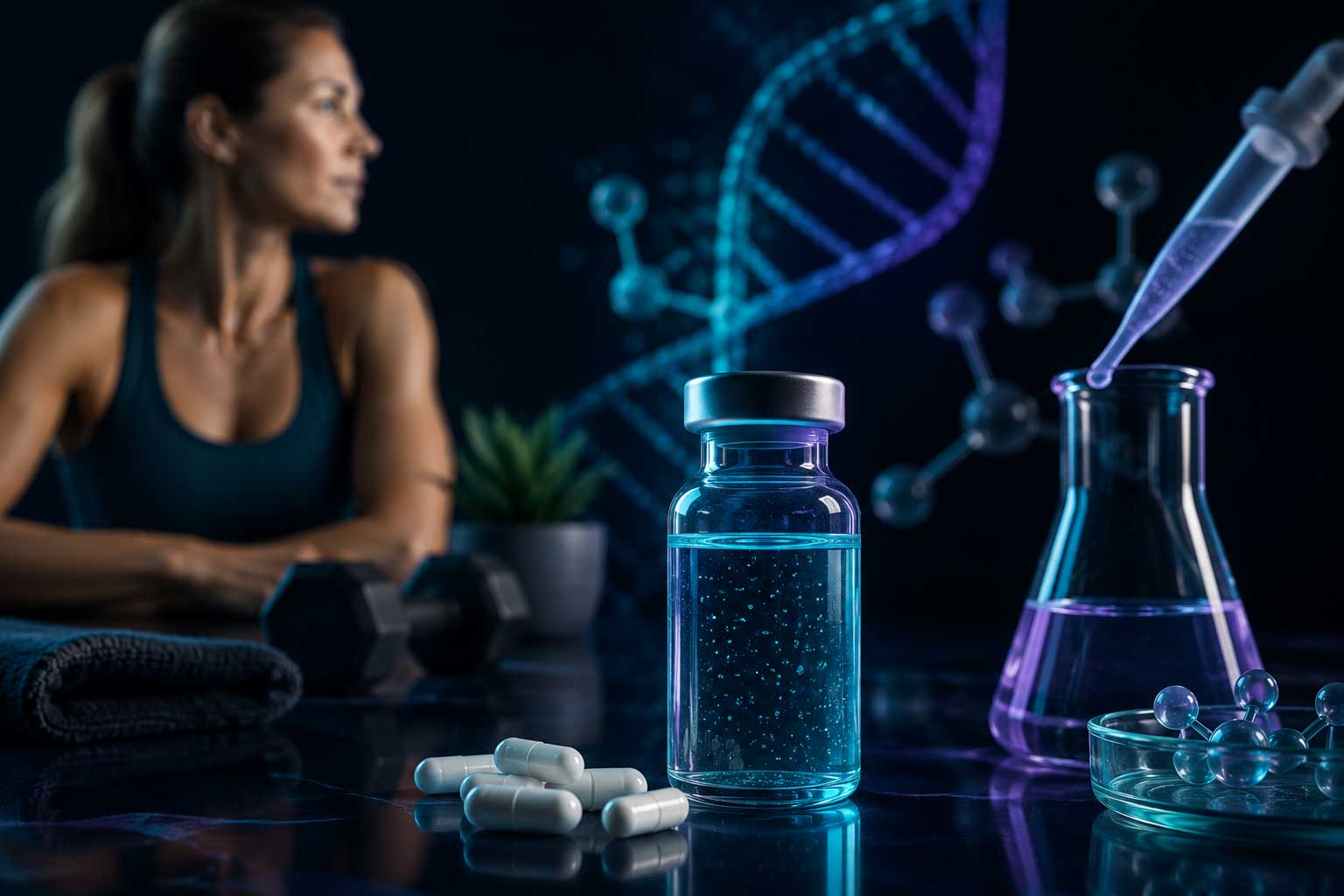
| Oral precursors (NMN, NR) | Capsules that the body converts toward NAD+ | Most studied in trials, convenient, reliably raise blood NAD+ |
| Intravenous NAD+ | NAD+ infused directly into the bloodstream | Delivered in a clinical setting, compounded preparation, limited formal trial data |
| Injectable NAD+ | Subcutaneous injections of NAD+ | More convenient than IV, evidence base still developing |
It is worth being candid that the precursors have the strongest published human data, while intravenous and injectable NAD+ are popular in clinical practice but supported more by mechanism and clinical experience than by large controlled trials.
Can you raise NAD+ naturally?
Before considering any therapy, it helps to know that your daily choices already move NAD+. Exercise, particularly the kind that challenges your cardiovascular system, raises NAD+ and the enzymes that recycle it. Periods of fasting or genuine calorie control do the same, which is part of why metabolic health and NAD+ tend to travel together. Limiting alcohol helps as well, because metabolizing it consumes NAD+.
None of this is glamorous, and none of it can be sold in a vial. But it is the foundation any supplement or infusion is meant to build on, not replace. A person who exercises, eats well, and sleeps enough is supporting their NAD+ every single day, for free.
Is NAD+ safe, and is it FDA approved?
Short-term safety data is reassuring. Across human trials, NAD+ precursors have been well tolerated with no serious adverse events reported at the doses studied. Nicotinamide riboside has received Generally Recognized as Safe status from the FDA as an ingredient.
Regulatory status is more nuanced, and it has shifted in recent years. NR is available as a supplement ingredient. The status of NMN as a dietary supplement has been the subject of changing FDA guidance. Intravenous and injectable NAD+ are not FDA-approved drugs; they are provided as compounded preparations, which means they are prepared by a pharmacy rather than manufactured and approved as a standardized medication. None of these is approved by the FDA as a treatment for aging. That is an important distinction to understand before starting any protocol.
Who is NAD+ therapy for?
NAD+ is best understood as a possible tool inside a larger plan, not a shortcut around one. The people most likely to consider it are those dealing with persistent fatigue, slower recovery, or the metabolic shifts of midlife who have already addressed, or are addressing, the foundations. And the foundations come first for a reason. Sleep, training, nutrition, stress, and any underlying hormonal imbalances move the needle far more than any single molecule, and no infusion compensates for ignoring them.
It is generally not the right first move for someone sleeping poorly, skipping training, and eating in a way that already drives fatigue. Fix those and you may not need it at all. It becomes a more reasonable consideration for someone who has the basics in place and is looking for an additional, evidence-informed edge in energy and recovery, with realistic expectations about how much it will do.
This is where our approach differs from a walk-in drip bar. At iRevive, we do not start with the infusion. We start with comprehensive lab work and an honest conversation about your goals, then consider NAD+ only where it fits the larger picture, and we monitor your response over time. Through our concierge telehealth model, you work with the same provider who can tell you plainly whether something is helping or simply costing you money.
What can you realistically expect to feel?
This is where honesty protects you from disappointment. NAD+ is not a stimulant, and it does not produce a dramatic, immediate high the way the marketing around some drip bars implies. People who benefit tend to describe gradual improvements in energy, mental clarity, and recovery over a span of weeks, layered on top of solid foundations rather than in place of them. If you have heard promises of an overnight transformation, lower your expectations and raise your skepticism.
It is also worth saying plainly that some people notice very little. Individual response varies, your starting point matters, and NAD+ is far more likely to help someone whose levels and lifestyle have room to improve than someone who is already well optimized. A provider willing to tell you that, rather than sell you a package regardless, is the kind worth working with.
The honest bottom line
NAD+ is real biology, not a fad, and the research is genuinely promising. It is also not a miracle, and the largest claims made for it have not yet been proven in humans. If a clinic sells it as the secret to reversing aging, be skeptical. If a thoughtful provider considers it as one evidence-informed tool within a complete, monitored plan, that is a reasonable conversation to have. The difference is not the molecule. It is the honesty around it.
Frequently Asked Questions
Does NAD+ therapy actually work?
NAD+ precursors like NR and NMN reliably raise NAD+ levels in human blood, and early trials show benefits such as improved muscle insulin sensitivity and possible cardiovascular support. However, the larger anti-aging and longevity claims are not yet proven in humans and come mostly from animal studies.
Is NAD+ FDA approved?
No NAD+ therapy is FDA approved as a treatment for aging. Nicotinamide riboside has Generally Recognized as Safe status as an ingredient, while intravenous and injectable NAD+ are provided as compounded preparations rather than approved drugs. Regulatory status for NMN as a supplement has changed in recent years.
What is the difference between IV NAD+ and oral NMN or NR?
Oral precursors (NMN and NR) are capsules the body converts toward NAD+, and they have the strongest published human trial data. Intravenous and injectable NAD+ deliver the compound more directly and are popular in practice, but they are supported more by mechanism and clinical experience than by large controlled trials.
Is NAD+ safe?
Short-term human trials report that NAD+ precursors are well tolerated with no serious adverse events at studied doses. Long-term safety data is still limited, which is one reason NAD+ should be used under clinical guidance and as part of a monitored plan rather than on your own.
How does iRevive use NAD+ therapy?
iRevive does not lead with infusions. We begin with comprehensive lab work and address foundational health first, then consider NAD+ only where it fits your individual picture, monitoring your response over time through a concierge telehealth model across Florida.
Medical Disclaimer: This article is for educational purposes only and is not medical advice. It is not a substitute for diagnosis or treatment from a qualified clinician. iRevive Integrative & Functional Medicine provides care via telehealth across Florida. Talk with a licensed provider about your individual health needs before making any changes.