Peptide Therapy in Lakewood Ranch, Sarasota & Bradenton
Targeted peptide protocols prescribed from lab data, not off a menu.
Peptides are short chains of amino acids that act as signaling molecules in the body. They tell specific systems to repair, regenerate, regulate, or recover. The clinical applications are broad: tissue healing, immune modulation, growth hormone optimization, gut restoration, fat metabolism, and neuroprotection. But the reason peptide therapy at iRevive looks different from what most clinics offer is the diagnostic step that comes first. Ryan Hentges, NP does not hand out peptide protocols based on symptoms alone. The starting point is always lab work. Inflammatory markers, hormone levels, metabolic panels, and immune function indicators determine which peptides carry the highest clinical value for your specific biology. A peptide that transforms one patient's recovery timeline may be irrelevant for another whose labs point to a completely different bottleneck.
BPC-157 | CJC/Ipamorelin | Lab-Guided ProtocolsAt a Glance
Service
Peptide Therapy (Medical-Grade Protocols)
Focus
Tissue repair, recovery, growth hormone support, immune regulation
Key Peptides
BPC-157, CJC-1295/Ipamorelin, Thymosin Alpha-1, and others per labs
Guided By
Comprehensive labs, clinical evaluation, and follow-up monitoring
Available In
Lakewood Ranch, Sarasota, Bradenton, Venice
Model
Concierge telehealth + $99/mo membership
What Is Peptide Therapy?
Peptide therapy uses naturally occurring or synthetic amino acid sequences to trigger specific biological responses. Unlike broad-spectrum pharmaceuticals that affect multiple systems simultaneously, peptides are targeted. Each one carries instructions for a particular cellular process: repair damaged tissue, stimulate growth hormone release, modulate immune activity, reduce systemic inflammation, or restore gut barrier integrity. The precision is what makes them useful clinically, and it is also what makes proper selection critical.
At iRevive, peptide prescribing starts with the same diagnostic foundation that drives every other service. Ryan Hentges, NP orders comprehensive labs that reveal your inflammatory status, hormonal profile, metabolic baseline, and immune function. Those results determine whether BPC-157, CJC-1295/Ipamorelin, Thymosin Alpha-1, or another peptide compound is the right fit. Dosing schedules, cycling protocols, and stacking strategies are all built around your individual data, not pulled from a generic catalog.
The follow-up matters as much as the prescription. Peptides interact with your body's own signaling pathways, and the response varies from patient to patient. Lab rechecks at defined intervals confirm whether the peptide is doing what it was prescribed to do, and adjustments happen based on measurable outcomes rather than subjective reports alone.
Who Benefits Most from Peptide Therapy?
Peptides are not a general wellness supplement. They are clinical tools prescribed for specific functional deficits that lab work can quantify. The categories below represent the most common patterns Ryan Hentges, NP sees in patients who respond well to targeted peptide protocols.
Repair & Recovery Candidates
- Chronic joint pain or tendon injuries that heal slowly
- Post-surgical recovery that is not progressing as expected
- Persistent gut issues (leaky gut, IBS, chronic inflammation)
- Recurring soft tissue injuries from training or activity
- Slow wound healing or prolonged soreness after exertion
- Chronic inflammatory markers on lab work (elevated hs-CRP)
- Autoimmune-related tissue damage or flares
- Previous injuries that never fully resolved
Performance & Optimization Candidates
- Declining lean muscle mass despite consistent training
- Poor sleep quality affecting recovery and cognition
- Reduced growth hormone output confirmed by lab work
- Stubborn body fat that does not respond to diet or exercise changes
- Low energy and fatigue not explained by thyroid or iron levels
- Weakened immune response or frequent illness
- Age-related decline in physical performance and endurance
- Interest in proactive longevity support with clinical oversight
How Does iRevive Prescribe Peptide Therapy?
The internet is full of peptide vendors selling compounds without clinical context. That approach skips the diagnostic step entirely and treats peptide therapy like a supplement decision rather than a medical one. iRevive's process is built around the principle that you should know exactly what problem a peptide is solving before you start taking it.
Diagnostic Labs
Inflammatory markers, hormonal panels, metabolic function, immune indicators, and growth factors measured to identify the specific systems that need support.
Clinical Assessment
Lab results reviewed alongside your symptoms, medical history, current medications, and treatment goals to determine which peptides align with your clinical picture.
Protocol Prescription
Peptide selection, dosing, administration route, cycling schedule, and any complementary interventions prescribed based on your data. Sourced from licensed compounding pharmacies.
Monitoring & Adjustment
Follow-up labs and clinical check-ins at regular intervals to confirm response, adjust dosing, and determine whether to continue, cycle off, or transition to a different protocol.
Peptides Prescribed at iRevive
BPC-157
A body-protective compound derived from a protein found in gastric juice. Research supports its role in accelerating tissue repair, healing gut lining damage, reducing inflammation, and supporting tendon and ligament recovery. One of the most widely studied peptides in regenerative medicine.
CJC-1295 / Ipamorelin
A growth hormone releasing peptide combination that stimulates natural GH production without the risks of exogenous HGH. May support lean body mass, fat metabolism, deep sleep quality, exercise recovery, and collagen synthesis. Dosed and cycled based on IGF-1 lab levels.
Thymosin Alpha-1
An immune-modulating peptide that supports T-cell function and adaptive immunity. Used clinically in patients with weakened immune response, chronic infections, or autoimmune conditions where immune regulation rather than suppression is the goal.
Thymosin Beta-4
Promotes wound healing, tissue repair, and cellular migration to injury sites. Research indicates potential benefits for cardiovascular tissue repair, reduced fibrosis, and accelerated recovery from acute tissue damage.
PT-141 (Bremelanotide)
An FDA-approved peptide for hypoactive sexual desire disorder. Works through melanocortin receptor activation in the central nervous system rather than vascular mechanisms, making it distinct from PDE5 inhibitors. Prescribed based on clinical evaluation.
Selank
A synthetic peptide with anxiolytic and nootropic properties. Research supports its role in reducing anxiety, improving cognitive function, and modulating immune response. Used in protocols targeting stress-related cognitive decline and immune dysregulation.
KPV
A tripeptide derived from alpha-MSH with potent anti-inflammatory properties. Studied primarily for gut inflammation, mucosal healing, and systemic inflammatory conditions. Often used alongside BPC-157 in GI-focused protocols.
Additional Peptides
iRevive maintains access to a broader peptide formulary through licensed compounding pharmacies. If your clinical picture calls for a peptide not listed here, Ryan Hentges, NP will evaluate whether it is appropriate and source it through verified channels.
Potential Benefits of Peptide Therapy
Outcomes depend on which peptides are prescribed, your baseline labs, and the clinical context driving the protocol. With proper selection and monitoring, patients may experience targeted improvements in the systems their peptides were chosen to address.
Two Tracks for Peptide Therapy
Repair & Recovery Track
For patients dealing with chronic injury, post-surgical healing, persistent gut inflammation, or tissue damage that conventional treatment has not resolved. This track centers on BPC-157, Thymosin Beta-4, KPV, and other repair-focused peptides selected based on the specific tissue systems involved. Lab work identifies the degree of inflammatory burden and guides both peptide selection and protocol duration. Most patients on this track are working toward a defined clinical endpoint: a healed tendon, restored gut barrier, or resolved inflammatory pattern.
Start Recovery Evaluation

Performance & Optimization Track
For patients whose labs confirm declining growth hormone output, poor sleep architecture, loss of lean mass, or immune function that has weakened with age. CJC-1295/Ipamorelin is the most common starting point on this track, often combined with Thymosin Alpha-1 for immune support or Selank for cognitive optimization. These protocols run on defined cycles with regular lab monitoring. The goal is not to push beyond normal ranges but to restore function that has declined below where your body operates best.
Explore Longevity ProtocolsPeptide Therapy Serving Lakewood Ranch, Sarasota & Bradenton
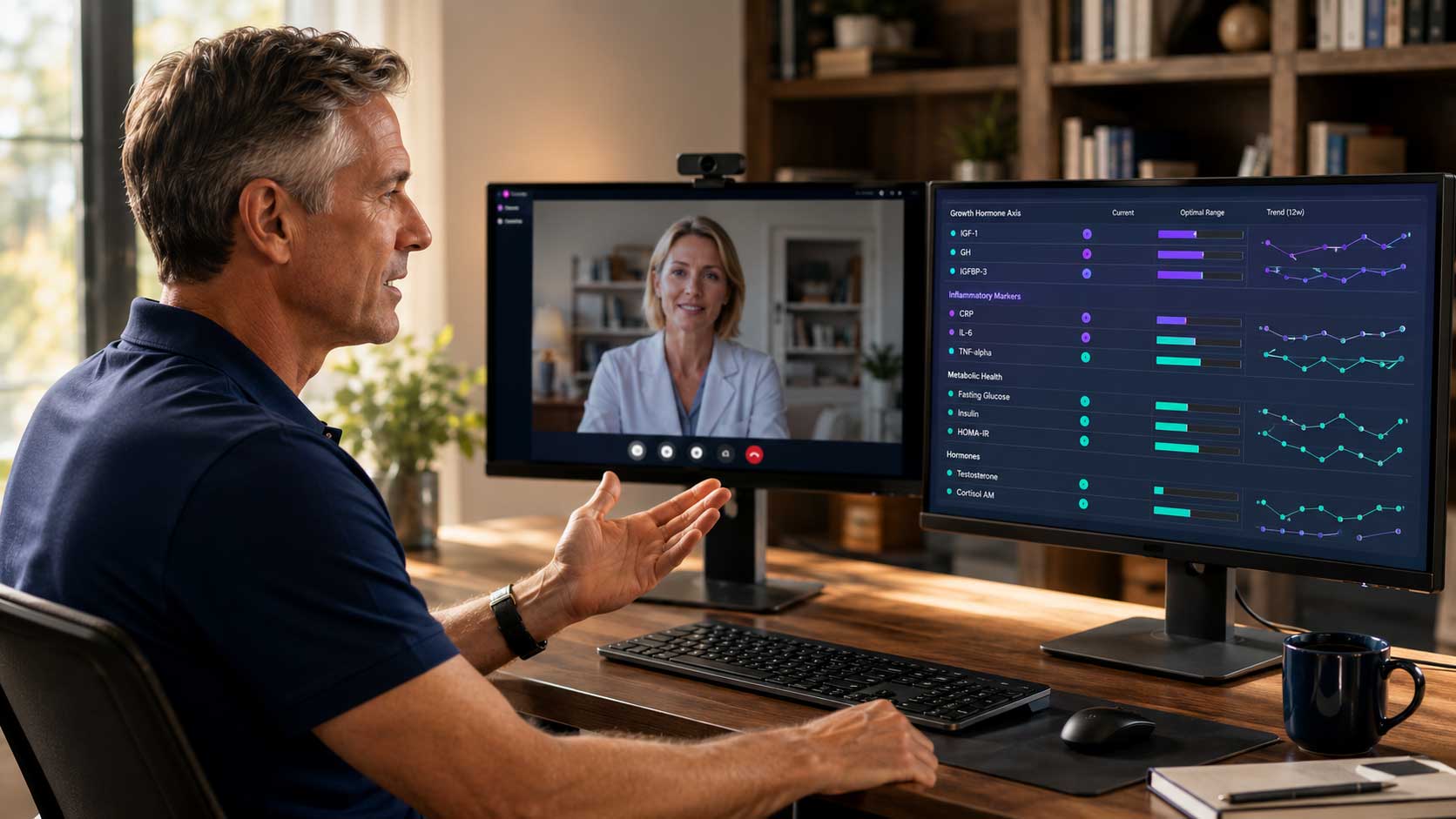
Peptide therapy requires clinical oversight, but it does not require an office visit every week. iRevive delivers the full program through telehealth. Lab orders, consultations, protocol design, follow-ups, and dosing adjustments all happen remotely. Your labs are drawn at a location convenient to you in Lakewood Ranch, Sarasota, Bradenton, or Venice. Peptides are sourced from licensed compounding pharmacies and shipped directly to your door. Between appointments, Ryan Hentges, NP is reachable by call or text. That kind of direct provider access is standard at iRevive, and the monthly membership that covers it starts at $99. Most patients who come to iRevive for peptide therapy have already been buying peptides online without clinical guidance. The difference is diagnostic context, pharmaceutical-grade sourcing, and someone tracking your labs to make sure the protocol is actually working.
- Lakewood Ranch, FL
- Sarasota, FL
- Bradenton, FL
- Venice, FL
- Telehealth across Florida

Peptide Therapy FAQs
Are peptides the same as steroids or HGH?
No. Peptides are amino acid chains that signal your body's own systems to perform specific functions. They are not anabolic steroids, and growth hormone secretagogues like CJC-1295/Ipamorelin work by stimulating your pituitary gland to produce its own growth hormone rather than introducing exogenous HGH. The mechanism, side effect profile, and clinical application are fundamentally different.
Where do iRevive's peptides come from?
All peptides prescribed by iRevive are sourced from licensed, FDA-regulated compounding pharmacies that follow current good manufacturing practices (cGMP). iRevive does not use research-grade peptides, gray market suppliers, or overseas vendors. Each compound comes with certificates of analysis confirming purity and potency. Pharmaceutical-grade sourcing is non-negotiable because contaminated or underdosed peptides are both ineffective and potentially harmful.
How are peptides administered?
Administration routes vary by peptide. Many are subcutaneous injections using small insulin-type needles that patients self-administer at home after instruction. Some peptides are available as oral capsules, nasal sprays, or topical creams depending on the compound and its intended target. Ryan Hentges, NP selects the administration route based on the peptide's pharmacokinetics and what achieves the best bioavailability for your specific protocol.
How long before I see results from peptide therapy?
Timelines depend on the peptide, the condition being treated, and your baseline physiology. BPC-157 for tissue repair may show measurable improvement within 2 to 4 weeks. CJC-1295/Ipamorelin for growth hormone optimization typically requires 8 to 12 weeks before body composition and sleep changes become apparent. Lab markers may shift sooner than subjective symptoms. Ryan Hentges, NP sets specific follow-up timelines for each protocol so progress is tracked objectively.
Can I combine peptide therapy with hormone optimization?
Yes, and the combination is common at iRevive. Hormonal imbalances affect the same systems peptides target: inflammation, tissue repair, body composition, immune function, and recovery. Patients on testosterone replacement, thyroid support, or GLP-1 therapy often add peptides to address specific clinical goals that hormone optimization alone does not fully cover. Ryan Hentges, NP manages the full protocol as a single integrated plan rather than treating each intervention in isolation.
Are there side effects?
Side effects vary by peptide but are generally mild when protocols are properly dosed and monitored. CJC-1295/Ipamorelin may cause temporary water retention, tingling, or increased hunger during the initial titration phase. BPC-157 is well-tolerated in most patients with minimal reported side effects. Injection site reactions (mild redness or irritation) can occur with subcutaneous administration. Ryan Hentges, NP reviews potential side effects for each peptide before prescribing and monitors for adverse responses through follow-up labs and check-ins.
Do I need lab work before starting peptides?
Yes. iRevive requires baseline labs before prescribing any peptide protocol. The specific panel depends on which peptides are being considered, but typically includes inflammatory markers (hs-CRP, homocysteine), a hormone panel, metabolic markers, immune function indicators, and IGF-1 for growth hormone evaluation. These labs establish where you are starting and provide the reference points needed to measure whether the peptide is producing the intended effect.
How is this different from buying peptides online?
Online peptide vendors sell compounds without lab work, clinical evaluation, or follow-up monitoring. Many sell research-grade products not intended for human use, with no third-party purity verification. iRevive prescribes pharmaceutical-grade peptides from licensed compounding pharmacies after comprehensive lab evaluation. Every protocol includes defined follow-up labs, dosing adjustments based on your response, and direct access to your prescribing clinician. The compound itself is only one part of effective peptide therapy. The clinical framework around it is what makes the difference.
Ready to Find Out Which Peptides Your Body Actually Needs?
The answer is in the labs. Inflammatory load, growth hormone output, immune function, metabolic efficiency. Once the data is on the table, Ryan Hentges, NP can tell you exactly which peptides address your specific bottlenecks and which ones you can skip entirely. That conversation starts with a consultation.