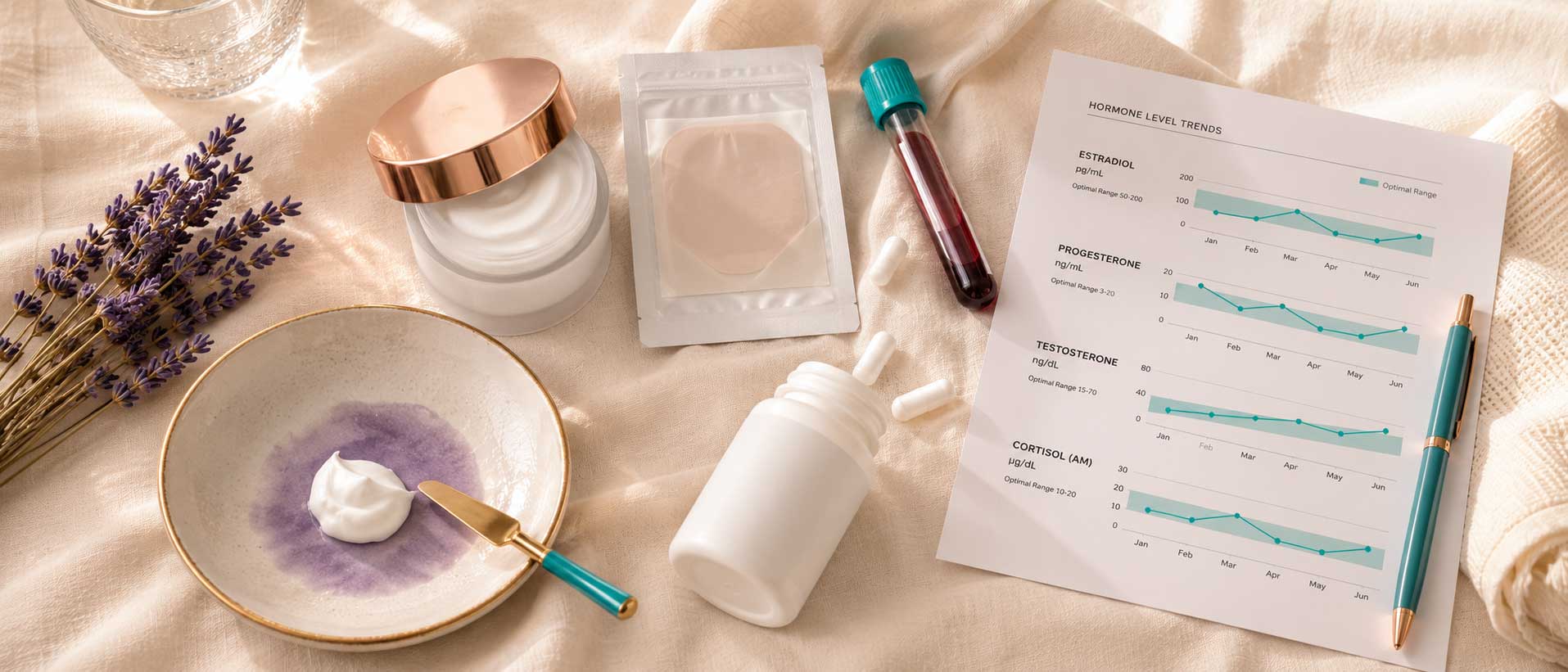
Women's Hormone Therapy & Menopause Treatment in Sarasota, Lakewood Ranch & Bradenton
Hormone protocols designed around your labs, your symptoms, and your life.
Hormonal changes in women are not a single transition. They unfold over years, sometimes decades, beginning with subtle shifts in progesterone and estrogen ratios long before a period is missed. Perimenopause can start in the late 30s or early 40s. By the time hot flashes, sleep disruption, and mood instability become impossible to ignore, the hormonal decline has been compounding quietly in the background. Most conventional providers offer two options: wait it out, or take a standard-dose estrogen patch and hope for the best. Neither approach accounts for the complexity of what is actually happening in your body. At iRevive, Ryan Hentges, NP builds every hormone protocol from a complete lab panel that includes estradiol, progesterone, testosterone, DHEA-S, cortisol, full thyroid function, and metabolic markers. The result is a protocol calibrated to your data, not a one-size prescription borrowed from a guideline written for the average patient.
BHRT | Perimenopause | Menopause | ThyroidAt a Glance
Service
Women's Hormone Therapy & Menopause Management
Focus
Hormone balance, symptom resolution, long-term metabolic health
Hormones
Estradiol, progesterone, testosterone, DHEA, thyroid
Conditions
Perimenopause, menopause, hormonal imbalance, PCOS, thyroid dysfunction
Available In
Sarasota, Lakewood Ranch, Bradenton, Venice
Model
Concierge telehealth + $99/mo membership
What Happens to Hormones During Perimenopause and Menopause?
Perimenopause is not a switch. It is a transition that can span 5 to 10 years before periods stop entirely. During this phase, progesterone typically declines first, which is why sleep disruption, anxiety, and cycle irregularity often show up years before hot flashes do. Estrogen levels fluctuate unpredictably, sometimes spiking before crashing. Testosterone, often overlooked in women's health, drops gradually and contributes to fatigue, loss of motivation, decreased libido, and difficulty maintaining muscle mass.
Menopause is confirmed after 12 consecutive months without a period, but the hormonal shifts that define it have usually been underway for years by that point. Post-menopausal women live with chronically low estrogen, progesterone, and testosterone, which carries downstream consequences for bone density, cardiovascular health, cognitive function, vaginal tissue integrity, and metabolic efficiency. These are not cosmetic concerns. They are clinical risks that compound over time.
At iRevive, hormone therapy for women begins with a lab panel that captures where each hormone currently sits, not where a textbook says it should be for your age. Ryan Hentges, NP prescribes bioidentical hormones, which are structurally identical to what your body produces naturally, at doses calibrated to restore balance without overshooting. Follow-up labs track the response and inform adjustments so the protocol stays aligned with how your body is changing.

How Do You Know If Your Hormones Are Out of Balance?
The challenge with hormonal decline in women is that the symptoms mimic stress, aging, thyroid dysfunction, and a dozen other conditions. Many women spend years managing individual symptoms without anyone connecting them to a hormonal root cause. The patterns below are what Ryan Hentges, NP hears most often from women whose labs confirm a hormonal deficit or imbalance.
Perimenopause Patterns
- Irregular periods, heavier flow, or cycle length changes
- New or worsening anxiety, especially in the luteal phase
- Sleep disruption: difficulty falling asleep or waking at 3 AM
- Mood swings, irritability, or emotional reactivity out of character
- Weight gain concentrated around the midsection
- Brain fog, word retrieval difficulty, or reduced mental sharpness
- Decreased libido or changes in sexual response
- Fatigue that does not respond to rest or lifestyle changes
Menopause & Post-Menopause Patterns
- Hot flashes, night sweats, or temperature instability
- Vaginal dryness, painful intercourse, or urinary frequency
- Chronic sleep fragmentation that worsens over time
- Accelerated bone density loss (osteopenia or osteoporosis risk)
- Persistent low energy despite adequate sleep
- Joint pain and stiffness without clear orthopedic cause
- Thinning hair, dry skin, or accelerated visible aging
- Rising cardiovascular risk markers (cholesterol shifts, blood pressure)
How Does iRevive's Women's Hormone Protocol Work?
Most hormone prescriptions for women are based on symptoms and age. That approach skips the diagnostic step that determines whether estrogen, progesterone, testosterone, thyroid, or some combination of all of them is the actual problem. iRevive does not prescribe without data. Every protocol starts with labs and adjusts based on measurable response.
Female Hormone Panel
Estradiol, progesterone, total and free testosterone, DHEA-S, cortisol, full thyroid (TSH, fT3, fT4, antibodies), metabolic markers, lipids, and inflammatory indicators drawn before any prescription is written.
Symptom-Lab Correlation
Results analyzed alongside your symptom timeline, menstrual history, medical background, and current quality of life to identify which hormonal shifts are driving which symptoms.
Bioidentical Protocol
Bioidentical estradiol, progesterone, and when indicated testosterone prescribed at doses matched to your lab data. Delivery method, timing, and supporting interventions tailored to your specific situation.
Ongoing Optimization
Follow-up labs at 6 to 8 weeks, then at regular intervals. Hormone levels, metabolic markers, and symptom response tracked together to keep the protocol calibrated as your body continues to change.
What Your Women's Hormone Protocol May Include
Bioidentical Estradiol
Estradiol replacement prescribed at the dose your labs indicate, not a standard starting amount. Delivery options include transdermal patches, topical creams, or other routes selected based on your risk profile and clinical response.
Bioidentical Progesterone
Progesterone is critical for sleep, mood stability, and uterine protection in women taking estradiol. iRevive prescribes bioidentical progesterone specifically, not synthetic progestins, because the clinical profile and side effect risk are fundamentally different.
Testosterone for Women
Low testosterone in women contributes to fatigue, low libido, reduced motivation, and difficulty building or maintaining lean mass. When labs confirm a deficit, low-dose bioidentical testosterone is prescribed and monitored carefully to avoid virilizing effects.
Thyroid Optimization
Thyroid dysfunction is disproportionately common in women and shares symptoms with hormonal decline: fatigue, weight gain, brain fog, depression. TSH alone misses subclinical dysfunction. iRevive tests TSH, free T3, free T4, and thyroid antibodies on every panel.
Adrenal & Cortisol Assessment
Chronic stress drives cortisol dysregulation, which disrupts progesterone production, accelerates hormonal decline, and amplifies perimenopause symptoms. Cortisol and DHEA-S levels evaluated as part of the complete hormonal picture.
Metabolic Health Monitoring
Fasting insulin, glucose, HbA1c, and lipid panels tracked because menopause accelerates metabolic changes that increase cardiovascular and diabetes risk. Hormone optimization and metabolic health are managed together, not separately.
Bone Density Considerations
Estrogen decline is the primary driver of post-menopausal bone loss. Hormone therapy may help support bone mineral density preservation. Ryan Hentges, NP factors bone health into the protocol discussion, particularly for women with family history or risk factors.
Ongoing Clinical Oversight
Regular telehealth consultations with Ryan Hentges, NP. Lab rechecks at defined intervals. Direct access by call or text between appointments. Your protocol evolves as your labs, symptoms, and life circumstances change.
Potential Benefits of Women's Hormone Optimization
Outcomes depend on your hormonal baseline, the degree of decline, and how your body responds to bioidentical hormone therapy. With properly dosed BHRT and comprehensive monitoring, women may experience relief across physical, emotional, and cognitive domains.
Two Tracks for Women's Hormone Care

Perimenopause & Early Transition Track
For women still menstruating but experiencing cycle changes, new anxiety, sleep disruption, brain fog, or mood shifts that started in their late 30s or 40s. This track often begins with progesterone support, which addresses the earliest hormonal shift most women experience. Testosterone and thyroid optimization are added when labs confirm deficits in those areas. Estradiol replacement may or may not be needed at this stage. The protocol is built to address what is actually declining now, with the flexibility to expand as the transition progresses.
Start Perimenopause Evaluation

Menopause & Post-Menopause Track
For women who have stopped menstruating and are living with the chronic effects of low estrogen, progesterone, and testosterone. Hot flashes, vaginal atrophy, sleep fragmentation, cognitive decline, bone density loss, and cardiovascular risk shifts are all driven by this sustained hormonal deficit. This track typically involves bioidentical estradiol, progesterone, and low-dose testosterone, with thyroid and metabolic support integrated as labs dictate. The goal is not just symptom relief but long-term health protection through sustained hormonal balance.
Learn About BHRTWomen's Hormone Therapy Serving Sarasota, Lakewood Ranch & Bradenton
Hormone conversations deserve more than a 7-minute appointment squeezed between other patients. iRevive runs the entire women's health program through telehealth, which means your consultation is an actual conversation, not a rushed checklist. Lab orders go to a draw station convenient to you in Sarasota, Lakewood Ranch, Bradenton, or Venice. Results are reviewed on a video call with Ryan Hentges, NP, who walks through every marker and explains what it means for your protocol. Prescriptions ship to your door. And between appointments, a call or text to your provider gets answered the same day, not triaged through a receptionist. That access is part of the concierge model, and the monthly membership starts at $99. Many women come to iRevive after spending years cycling through providers who either dismissed their symptoms or prescribed without running labs first. This is a different kind of practice.
- Sarasota, FL
- Lakewood Ranch, FL
- Bradenton, FL
- Venice, FL
- Telehealth across Florida

Women's Hormone & Menopause FAQs
What are bioidentical hormones, and how are they different from synthetic?
Bioidentical hormones are structurally identical to the hormones your body produces naturally. They are derived from plant sources and then modified to match human hormone molecules exactly. Synthetic hormones, like medroxyprogesterone acetate (Provera) or conjugated equine estrogens (Premarin), have different molecular structures and carry different risk profiles. The Women's Health Initiative study that raised concerns about hormone therapy in 2002 used synthetic hormones, not bioidenticals. Subsequent research has shown that bioidentical estradiol and progesterone have a more favorable safety profile, particularly regarding breast cancer and cardiovascular risk.
When should I start hormone therapy?
The optimal time to start depends on your symptoms, lab results, and individual risk factors. Many women benefit from progesterone support during early perimenopause, sometimes years before estrogen replacement becomes necessary. For women already in menopause, current evidence supports starting hormone therapy within 10 years of menopause onset for the best risk-benefit profile, particularly for cardiovascular and bone protection. Ryan Hentges, NP evaluates your complete picture and discusses timing as part of your initial consultation.
Does hormone therapy increase breast cancer risk?
This question traces back to the 2002 WHI study, which used synthetic conjugated equine estrogens and medroxyprogesterone. Those synthetic compounds do carry different risks than bioidentical hormones. Research published since 2002 indicates that bioidentical estradiol combined with bioidentical progesterone has a substantially lower breast cancer risk compared to synthetic hormone combinations. That said, individual risk factors including family history, breast density, and genetic markers are all evaluated before prescribing. Ryan Hentges, NP discusses the evidence and your personal risk profile in detail before starting therapy.
Why do women need testosterone?
Testosterone is not just a male hormone. Women produce testosterone in the ovaries and adrenal glands, and it plays a direct role in libido, energy, mood, motivation, muscle maintenance, and cognitive function. Testosterone levels in women decline gradually starting in the late 20s and drop further during perimenopause and menopause. By post-menopause, many women are producing a fraction of their peak testosterone output. Low-dose bioidentical testosterone, carefully monitored through lab work, can address symptoms that estrogen and progesterone alone do not fully resolve.
What if I had a hysterectomy?
Women who have had a hysterectomy do not need progesterone for uterine protection, which simplifies the protocol in one respect. However, hysterectomy, particularly when combined with oophorectomy (ovary removal), causes an abrupt hormonal drop that often produces more severe symptoms than natural menopause. Estradiol and testosterone replacement become especially relevant in this scenario. Ryan Hentges, NP adjusts the protocol based on whether ovaries were preserved or removed and how your labs present at the time of evaluation.
Can hormone therapy help with weight gain during menopause?
Hormonal decline contributes to weight gain through multiple mechanisms: declining estrogen shifts fat storage toward the abdomen, reduced testosterone impairs muscle metabolism, thyroid changes slow metabolic rate, and insulin resistance tends to worsen during the menopausal transition. Restoring hormonal balance may help support improved body composition, but hormone therapy is not a weight loss drug. For women whose weight concerns involve significant metabolic dysfunction, Ryan Hentges, NP may recommend combining hormone optimization with a medical weight management protocol for the most comprehensive approach.
How long can I stay on hormone therapy?
Current evidence supports individualized duration decisions rather than arbitrary time limits. The outdated practice of stopping HRT after 5 years was based on the 2002 WHI data using synthetic hormones. More recent research suggests that for many women, the benefits of bioidentical hormone therapy, including bone protection, cardiovascular support, and cognitive health, continue as long as therapy is maintained. Ryan Hentges, NP reassesses risk and benefit at each follow-up and discusses duration as an ongoing conversation, not a fixed endpoint.
What about thyroid issues? Are they related to menopause?
Thyroid dysfunction and menopause overlap in timing and symptoms, which is why thyroid labs are included on every panel at iRevive. Hashimoto's thyroiditis, the most common cause of hypothyroidism, disproportionately affects women and often surfaces or worsens during perimenopause. Symptoms like fatigue, weight gain, brain fog, and depression can be caused by thyroid dysfunction, hormonal decline, or both. Treating one without evaluating the other leaves gaps in the clinical picture. iRevive tests TSH, free T3, free T4, and thyroid antibodies to catch what a standard TSH-only test would miss.
Ready to Find Out What Your Hormones Are Actually Doing?
Estradiol, progesterone, testosterone, thyroid, cortisol, metabolic markers. Once the lab results are on the table, the conversation shifts from symptom management to a protocol built around your specific biology. A consultation with Ryan Hentges, NP is the first step toward hormone balance that is measured, not guessed at.